









![[Valid RSS]](https://www.futsalfocus.net/wp-content/uploads/2020/01/valid-rss-rogers.png "Validate my RSS feed")

Estimated reading time:10 minutes, 45 seconds
UEFA Futsal World Cup 2028 qualifiers – Group B review and prediction
Group B of UEFA’s preliminary round for the 2028 FIFA Futsal World Cup has turned into exactly the kind of short-format drama that makes these mini-tournaments so compelling. Four teams, three matches each, one venue, and only two places available in the main round: the format rewards clarity, punishes instability, and magnifies every swing in momentum. UEFA’s structure is straightforward but ruthless , the top two in each preliminary-round group advance, and there is very little time to recover from one bad game.
(Connor Millar doing what he has done for years, scoring goals. Source of the picture: NI Futsal Federation)
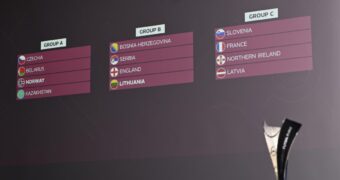
On paper, the group looked relatively simple before a ball was kicked. Sweden came in as the highest-ranked side in Group B, with England next and hosting, then Switzerland, and finally Northern Ireland as the lowest-ranked team in the section. The draw reflected that order: Sweden, England, Switzerland, Northern Ireland.
And for many spectators and the media, that would be the expected hierarchy. The reality has been much more interesting.
UEFA’s preliminary-round guide confirms the result that changed the group: Northern Ireland beat England 7–5, a result UEFA highlighted as Northern Ireland’s first-ever competitive win. Alongside Sweden’s 3–2 victory against Northern Ireland and Sweden’s 1–1 draw with Switzerland, it left the group finely poised heading into the final fixtures.
And that is where the stats matter. The scores alone tell you what happened. The numbers explain why.
England: explosive, clinical, but dangerously open
England’s tournament has been defined by extremes.
The 9–0 win over Switzerland looked like total control from the outside. In truth, it was something more complicated, and more revealing. England scored nine goals from 13 shots on target, which is an extraordinary level of finishing efficiency. They blocked 16 Swiss efforts and kept a clean sheet. But Switzerland still produced 34 total attempts and won nine corners, compared with England’s 25 attempts and one corner. That matters. England were devastating in the decisive moments, but they were not strangling the game territorially. They were surviving pressure, absorbing phases, and punishing Switzerland with ruthless efficiency.
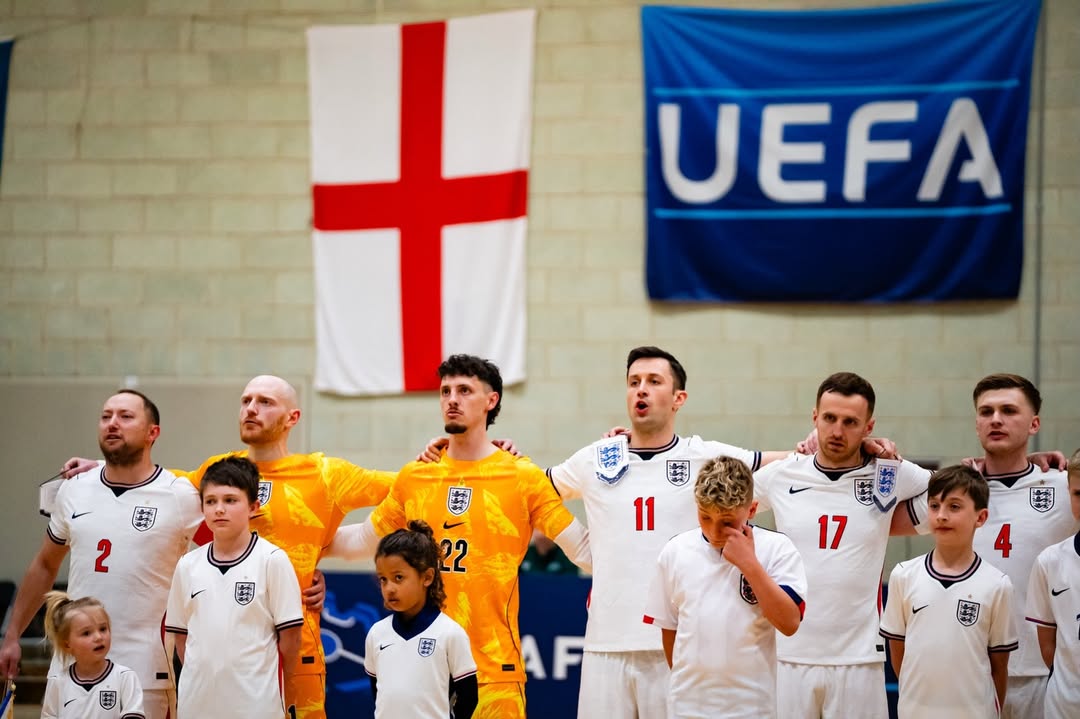
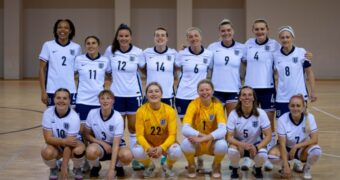
England national futsal team – Source of the picture: England Futsal Instagram – Captured through the 📸 of @beccataylor.photography
That profile carried straight into the Northern Ireland game, only this time the opponent punished them. England still generated 35 attempts and 11 on target in the 7–5 defeat, which underlines their attacking quality. But Northern Ireland finished with 44 attempts, 20 on target, 14 corners, and two efforts against the woodwork. England’s five goals show their attacking ceiling. Conceding 20 shots on target shows the scale of the structural problem. This was not simply one wild match; it exposed the risk built into England’s style. They can score in bursts, but they are giving opponents too many looks at goal. That is the key distinction.
England are not just “good going forward.” They are a side whose attacking output can mask defensive instability until it meets an opponent capable of matching their tempo. Switzerland could not. Northern Ireland could.
Sweden: the most stable side, but not the most convincing finishers
If England have been volatile, Sweden have been more recognisable as a seeded favourite. Their numbers across the first two matches show a team that controls more of the game than anybody else in the group.
Against Northern Ireland, Sweden produced 29 attempts to 16 and 12 shots on target to eight. They also won the corner count 7–5. Against Switzerland, they again edged the volume, finishing with 38 attempts to 35, 13 shots on target to 12, and 10 corners to eight. In other words, Sweden have spent two matches dictating tempo, building pressure, and forcing opponents to spend long stretches defending.
But Sweden’s issue is the same in both games: their control has not become separation.
They beat Northern Ireland only 3–2 despite dominating shot volume, and they were held 1–1 by Switzerland in a game where they again had the larger attacking total. Sweden have looked like the most stable team in Group B, but not an overwhelming one. They manage matches better than England. They impose themselves more consistently than Switzerland. But they have not yet shown the cutting edge to turn control into comfort.
That is important heading into the last day. Sweden are the team most likely to avoid disaster because their structure is the soundest in the group. But they have also left every match alive for longer than they should have.
Northern Ireland: the group’s most remarkable story, and not by accident
Northern Ireland were the lowest-ranked side in Group B going into the week. That matters because it frames just how significant their performances have been. UEFA’s own update described the win over England as their first-ever competitive victory, which immediately places this run in historic context.
Yet the most striking thing is that Northern Ireland’s progress does not look like a fluke when you study the matches.
Even in defeat to Sweden, they showed the profile of a dangerous tournament team. They produced 16 attempts, but still put eight on target, scored twice, and hit the woodwork once. They did not need territorial control to stay dangerous. Then against England, they exploded, 44 attempts, 20 on target, seven goals, 14 corners. That is not smash-and-grab futsal. That is a team creating real pressure and then finishing it with conviction.
Northern Ireland have, in effect, shown two versions of themselves in one week: they were competitive in a lower-volume game against Sweden, then aggressive and clinical in a much more open game against England. That tactical elasticity is a huge part of why they are now genuine contenders to qualify.
The Northern Ireland Futsal Federation describes itself as administering national men’s and women’s leagues and developing academy structures to grow the game, while recent federation updates have highlighted youth initiatives and the continued building of domestic structures. That makes this run feel bigger than one good week. Northern Ireland are not arriving from a fully mature futsal ecosystem; they are emerging from a federation that is actively trying to strengthen the sport’s pathways and profile.
So if Northern Ireland qualify, it is not just a nice underdog result. It becomes one of the most notable overperformances of this preliminary round because it would show a still-developing programme out-executing more established opponents in a pressure format.
Enrique Guillen’s influence is already visible
This is also where the coaching angle belongs, not as decoration, but as analysis.
The Northern Ireland Futsal Federation announced Enrique Guillen as the new national-team head coach in 2026 and presented the appointment as part of the continued growth and professionalisation of futsal in the country. The federation highlighted his experience across men’s, women’s and youth futsal and positioned him as a coach capable of leading the next phase of the programme.
That matters because Northern Ireland already look coached.
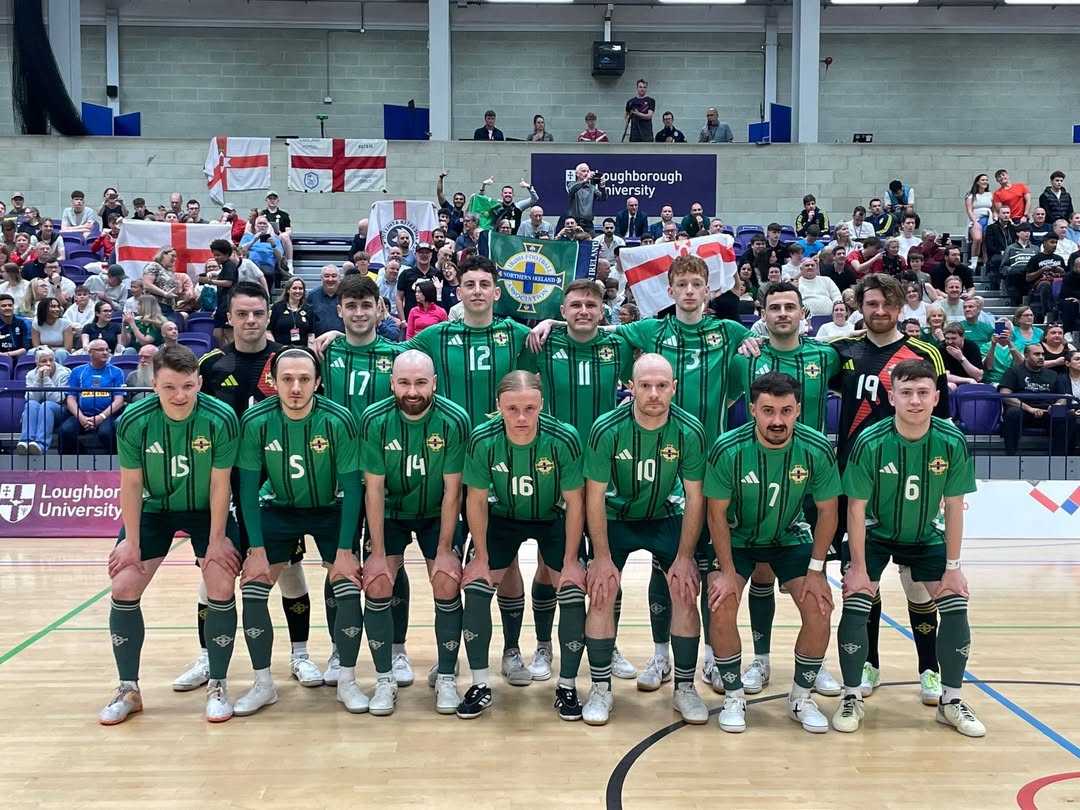
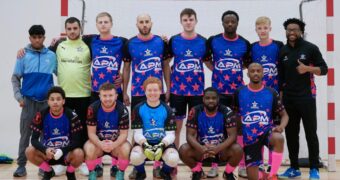
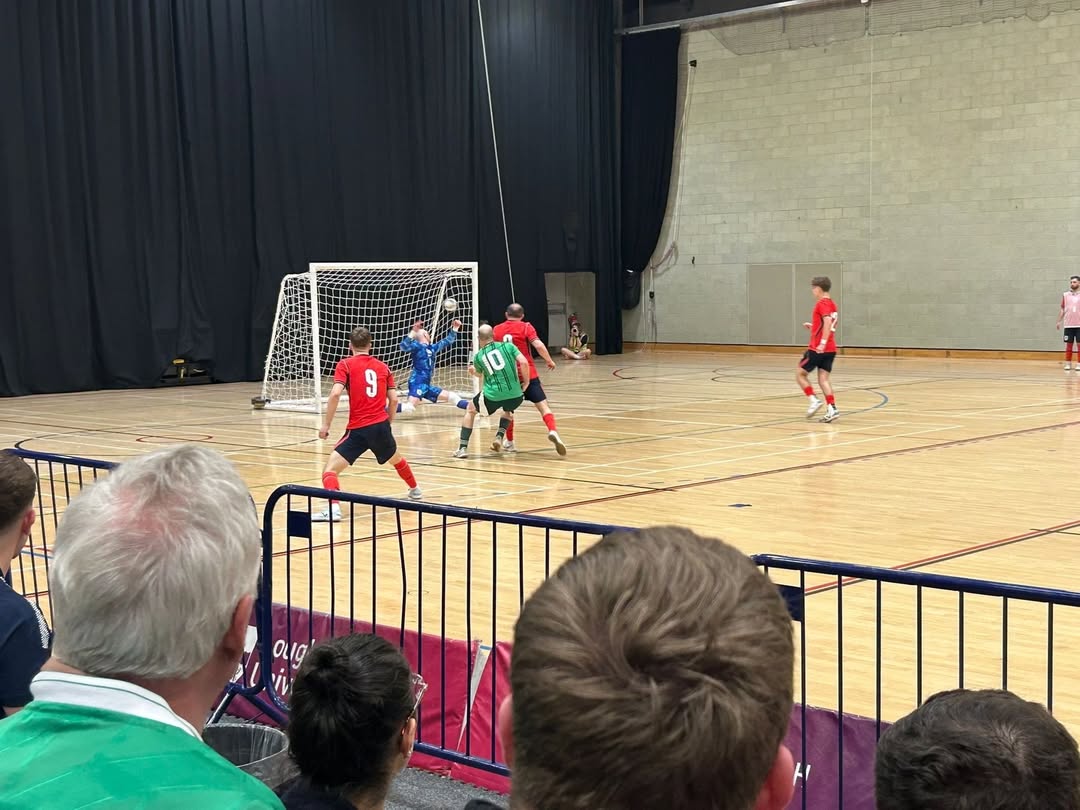
Northern Ireland national futsal team – source of the picture: NI Futsal Federation Instagram
They do not simply look emotional or opportunistic. They look clear. Against Sweden, they were compact enough to stay in the game and sharp enough to threaten without much of the ball. Against England, they looked ready for a match that would break into transitions and trusted their patterns enough to attack it rather than fear it. That shift between game states is one of the clearest signs of coaching impact in a short tournament. It suggests a team with a defined identity rather than one just riding momentum.
That does not mean Guillen is solely responsible for everything Northern Ireland have done. But it does mean his appointment belongs in the story, because the early signs point toward a side with structure, belief and tactical direction.
Switzerland: inconsistent, but not irrelevant
Switzerland have been the hardest team in the group to define because their results have been so contradictory.
The 9–0 defeat to England is the scoreline that jumps off the page, yet even in that match Switzerland still took 34 attempts and won nine corners. That tells you they were present in the game, but catastrophically inefficient in both boxes. Against Sweden, they corrected that imbalance. Switzerland posted 35 attempts, 12 on target, eight corners, nine blocks, and held the group favourites to a 1–1 draw in a match that was physically contested and much more controlled.
The lesson from Switzerland’s week is that they are not short of activity. They can produce pressure. They can generate attempts. The issue is whether they can keep their defensive structure intact long enough for that pressure to matter. Against England, the game opened and they were torn apart. Against Sweden, they stayed compact and got their reward.
That is why Switzerland remained dangerous heading into the final day, even if they were outsiders. The draw with Sweden proved they were capable of disrupting the group again.
The group is really a clash of four futsal identities
What makes Group B interesting is not simply that it is close. It is that each side is arriving at its results through a different tactical route:
-
- England are the most explosive side in the group, capable of devastating finishing, but they are also the most open.
- Sweden are the most stable, with the clearest control of tempo and shot volume, but they have not been ruthless enough.
- Northern Ireland are the most efficient and adaptable, dangerous in both controlled and chaotic games.
- Switzerland are the least predictable, but when they find defensive compactness they can stay competitive against stronger opponents.
That blend of styles is why the group has felt so alive. There is no single formula winning here. Every match has been about which identity gets imposed.
The qualification picture: what is actually true
The crucial correction is this: if England beat Sweden, England qualify for the main round regardless of the Northern Ireland–Switzerland result. England would move to six points. Sweden would remain on four. Switzerland could reach only four. Northern Ireland could reach six at most. England therefore cannot finish outside the top two if they win. In that scenario, goal difference matters for placing, not for whether England qualify at all.
That distinction is important, because it means England still control a significant part of their own destiny heading into the final matchday.
They are not simply reliant on other results. If England beat Sweden, they move to six points and will secure qualification regardless of the outcome in the other fixture. In that scenario, goal difference is more likely to determine group position rather than progression.
Sweden remain in the strongest overall position at this stage. They are unbeaten and need only to avoid defeat to place themselves in a very strong position to qualify.
For Northern Ireland, the equation is clear: a win against Switzerland would put them in a commanding position and apply immediate pressure on the England–Sweden result, this fixture also kicks off early so England Sweden will know the result heading into their match.
Switzerland, meanwhile, require both a victory and a favourable outcome elsewhere to keep their qualification hopes alive.
Final prediction
Before the group started, the logical expectation was Sweden and England.
Based on the futsal actually played, the strongest profiles heading into the final day are Sweden and Northern Ireland.
Sweden have been the safest bet because their structure has held in every match, even if they have not been dominant enough to pull away. Northern Ireland have been the most impressive because their numbers back up the story: they are not just competing, they are creating chances and converting them in the moments that decide matches. England remain the wild card, the team with the highest attacking ceiling, but also the clearest flaw. Switzerland are still alive because they have shown they can stay in games when they control tempo.
So the cleanest, most defensible conclusion is this: Sweden look the most likely team to qualify, Northern Ireland look the most compelling challenger, and England still have a direct route if they can solve the one problem that has defined their week, defensive control.
Final word
Group B has become more than a preliminary-round subplot. It has been a small, sharp lesson in what futsal rewards under pressure.
Control matters. Efficiency matters. Coaching matters. So does the ability to recognise what kind of game is in front of you and adapt before it gets away from you.
If Sweden progress, it will be because they were the most stable team in the group.
If England progress, it will be because their firepower was strong enough to overcome their instability.
If Northern Ireland progress, it will be the most significant story of all, a historic competitive breakthrough, under a newly appointed coach, from a programme still building its pathways and identity, and doing so by playing futsal with clarity rather than fear.