







![[Valid RSS]](https://www.futsalfocus.net/wp-content/uploads/2020/01/valid-rss-rogers.png "Validate my RSS feed")

Estimated reading time:5 minutes, 24 seconds
UEFA Futsal World Cup 2028 qualifiers, Group A review
Group A did not take long to show what it would become.
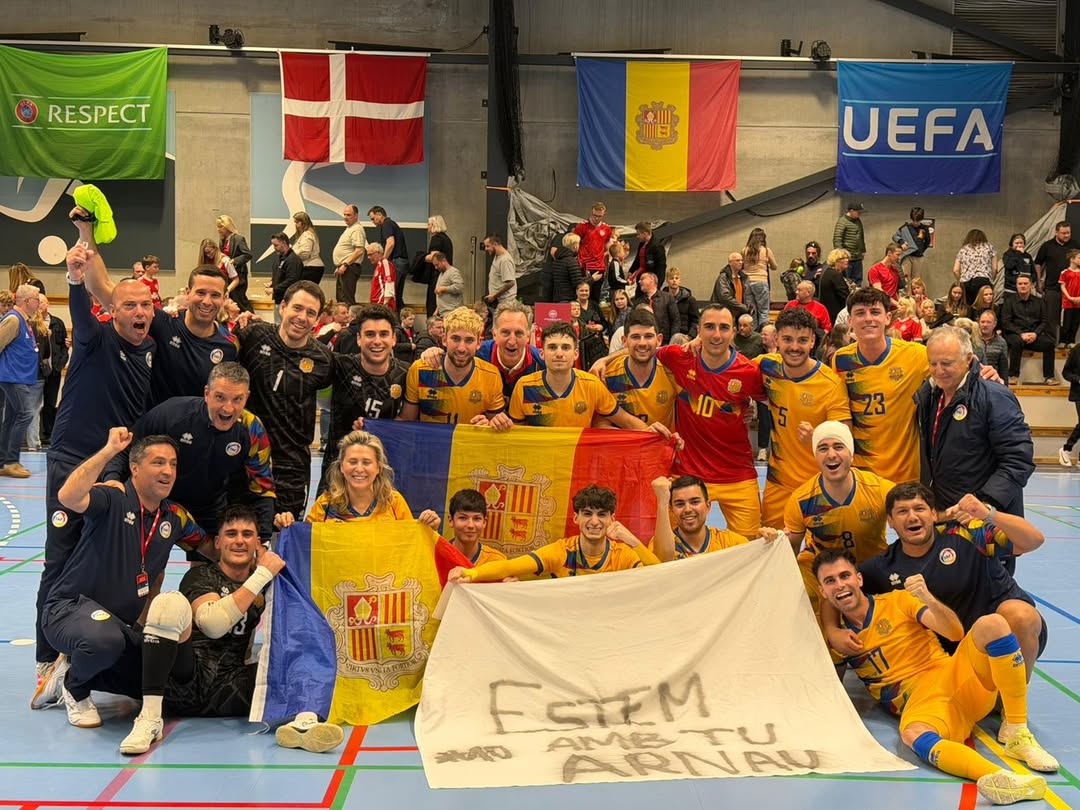
Three matchdays, six games, and by the end Andorra national futsal team had won every match, Denmark national futsal team had done enough to follow them through, and both Malta national futsal team and Scotland national futsal team were left chasing games they could never quite control.
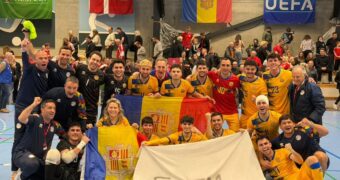
(Main picture: Andorra national futsal team – source of the image: Andorra FA Instagram
The margins were not hidden. They were repeated. This was a group where chances came easily, but control did not. What mattered was not how often teams created opportunities, but what they did with them.
The game that decided first place
Some groups unfold slowly. This one didn’t.
Andorra’s 5–3 win over Denmark did not just settle the standings. It explained them. Denmark had more attempts, 23 to Andorra’s 18, and more corners, 9 to 4. They spent longer in attacking phases and carried more territorial pressure. But the decisive number sat elsewhere: both teams produced nine shots on target.
From identical high-quality chances, Andorra scored five. Denmark scored three.
Just as importantly, every time Denmark equalised — first at 2–2, then again at 3–3 — Andorra responded immediately. The game never reset. It never tilted. It simply continued on Andorra’s terms.
That pattern did not just decide the match. It defined the group.
Andorra: clarity in every phase
Andorra did not rely on a single type of performance to win this group. They adapted to each match, but the outcome remained consistent.
Against Scotland, the game was decided through repetition and access to central areas. Andorra produced 41 attempts to Scotland’s 14, with 16 on target and 12 corners. Even with Scotland blocking 15 shots, the same patterns kept emerging, and the scoreline reflected that.
Against Malta, the balance shifted. The attempts were almost identical at 28 to 27, but Andorra still won 5–0. The difference came from shot quality and decision-making, turning 12 shots on target into goals while limiting Malta to seven.
Against Denmark, Andorra were pushed further than at any other point in the group. They had fewer attempts and fewer corners, and they conceded more territory. But they matched Denmark for shots on target and proved more decisive in front of goal.
That is what defined their campaign. Not control in every moment, but clarity in the ones that mattered.
Denmark: control without resolution
Denmark’s tournament is one of strong structure and incomplete outcomes.
They generated more attacking volume than any team in the group, producing 107 attempts across three matches. Against Scotland, that translated into clear control, with 49 attempts, 15 on target and 13 corners in a 3–1 win. Scotland were forced into 20 blocks, a sign of sustained pressure.
But the same control did not translate into dominance against Andorra. Denmark stayed in the game, equalising twice and creating enough chances to compete, but they were unable to stabilise the match after those moments.
Each equaliser should have reset the contest. Instead, it exposed them again. Andorra regained the lead quickly, and Denmark were forced back into chasing the game.
They controlled phases, but not outcomes. And in a group decided by moments, that distinction was decisive.
Malta: a shift in control
Malta’s campaign changed as the tournament progressed.
The opening matches against Denmark and Andorra followed a similar pattern. Malta competed for periods but were punished in key moments. Against Andorra, the numbers were close, with 27 attempts to 28 and only a small difference in corners. But a red card midway through the match disrupted their structure and allowed the game to move away from them.
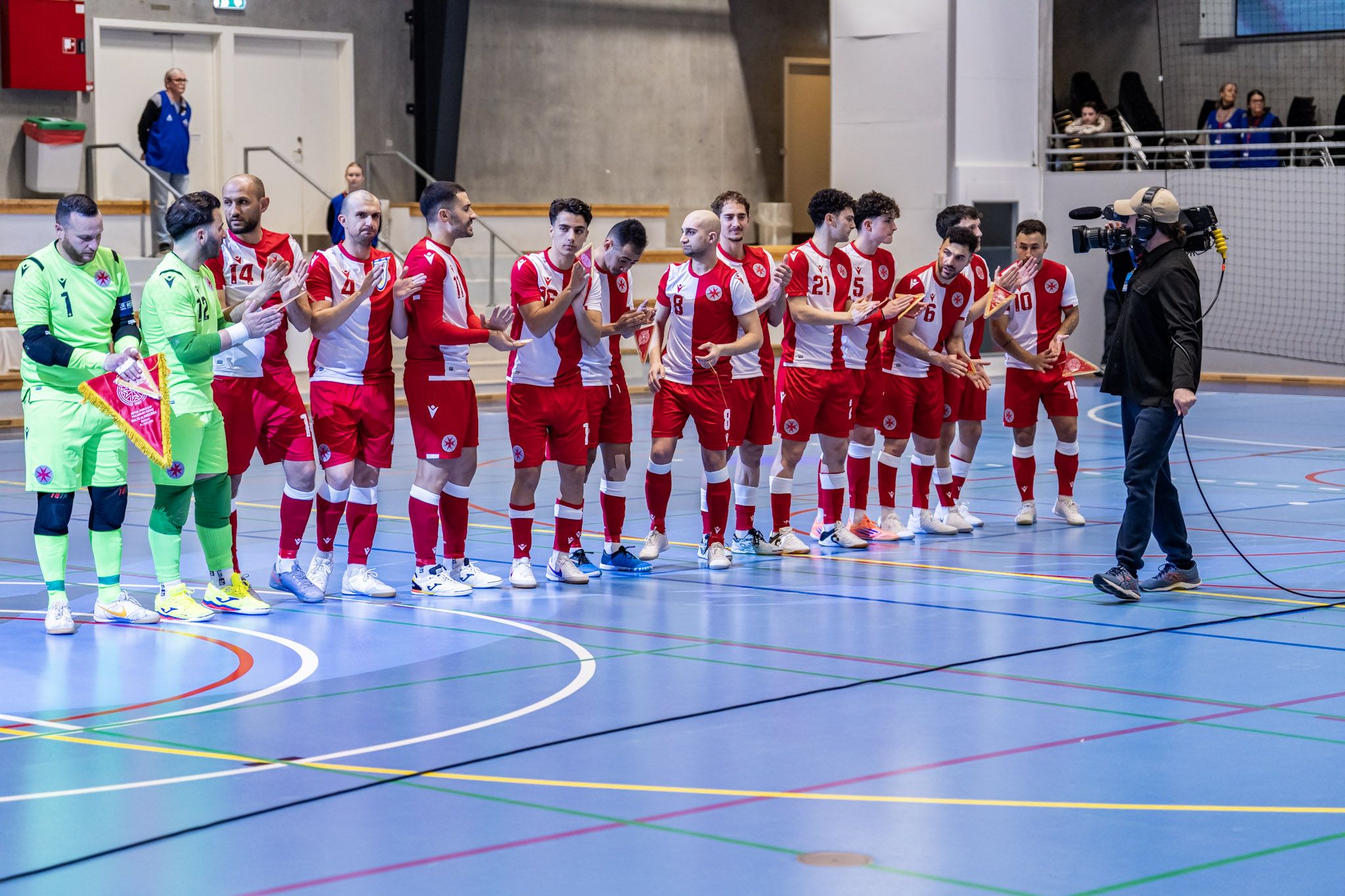
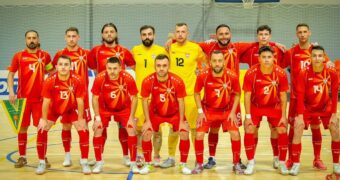
Malta national futsal team – source of the image: Malta FA website
By the final match against Scotland, the same type of game produced a different outcome. It was open, balanced and high-scoring, with Malta recording 31 attempts to Scotland’s 28 and a slight edge in shots on target.
This time, Malta did not lose control of the decisive moments. They responded to setbacks, stayed in the game, and took the final chance.
That shift, from reacting to defining, marked the most important step in their tournament.
Scotland: exposed by repetition
Scotland’s campaign was shaped early and never fully recovered.
The opening defeat to Andorra exposed structural weaknesses, particularly in defending central spaces and managing repeated attacking patterns. Conceding 41 attempts in a single match set a tone that carried through the group.
In the following games, Scotland showed they could compete in more open conditions. Against Denmark, they absorbed pressure and produced 20 blocks. Against Malta, they created 28 attempts and scored three goals.
But they were unable to control games when they became stretched. Defensive organisation broke down under sustained pressure, and transitions were difficult to manage.
The result was a team capable of competing in phases, but not sustaining control across a full match.
What the group showed
By the end, the standings looked clear. The reasons behind them were not.
Andorra did not win because they created more chances in every match. They won because they used them more effectively, and more consistently.
Denmark showed they can control territory and build pressure, but not always determine the direction of the game.
Malta showed how a team can evolve within a tournament, turning similar situations into different outcomes.
Scotland showed how quickly matches can become unmanageable when defensive structure is lost.
Final word
Group A was not decided by how much teams did. It was decided by what they did with it.
Andorra progressed because they removed uncertainty from their chances. Denmark progressed because their control was still enough. The rest were left in games they could influence, but not define.
And in a group this short, that difference does not take long to appear.
Organ Donation
Futsal Focus is a supporter of Dáithí Mac Gabhann and his family’s campaign to raise awareness of Organ Donation. We encourage our readers to learn more about Organ Donation: https://www.organdonation.nhs.uk/
Futsal Focus
You can read more articles about global futsal by going to the top navigation bar or by clicking here.
If you like this article and would like to keep updated on Futsal news, developments, etc then you can now follow Futsal Focus via Google News by following our page.
You can also keep updated on Futsal news by submitting your email in the Subscribe to Futsal Focus option.
Follow Futsal Focus on Facebook, Twitter, or Instagram via the website.




