







![[Valid RSS]](https://www.futsalfocus.net/wp-content/uploads/2020/01/valid-rss-rogers.png "Validate my RSS feed")

Estimated reading time:5 minutes, 50 seconds
UEFA Futsal World Cup 2028 qualifiers, Group D review
Group D looked decided early. It almost wasn’t.
Three matchdays, six games, and while the Kosovo national futsal team imposed themselves on the group with relentless attacking output, the final moments still carried enough tension to change everything. Montenegro national futsal team followed them through to the main round, while Austria national futsal team and Gibraltar national futsal team were left with very different reflections on where the group slipped away.
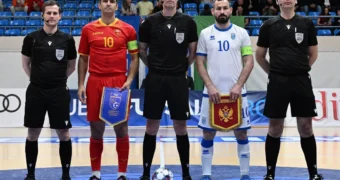
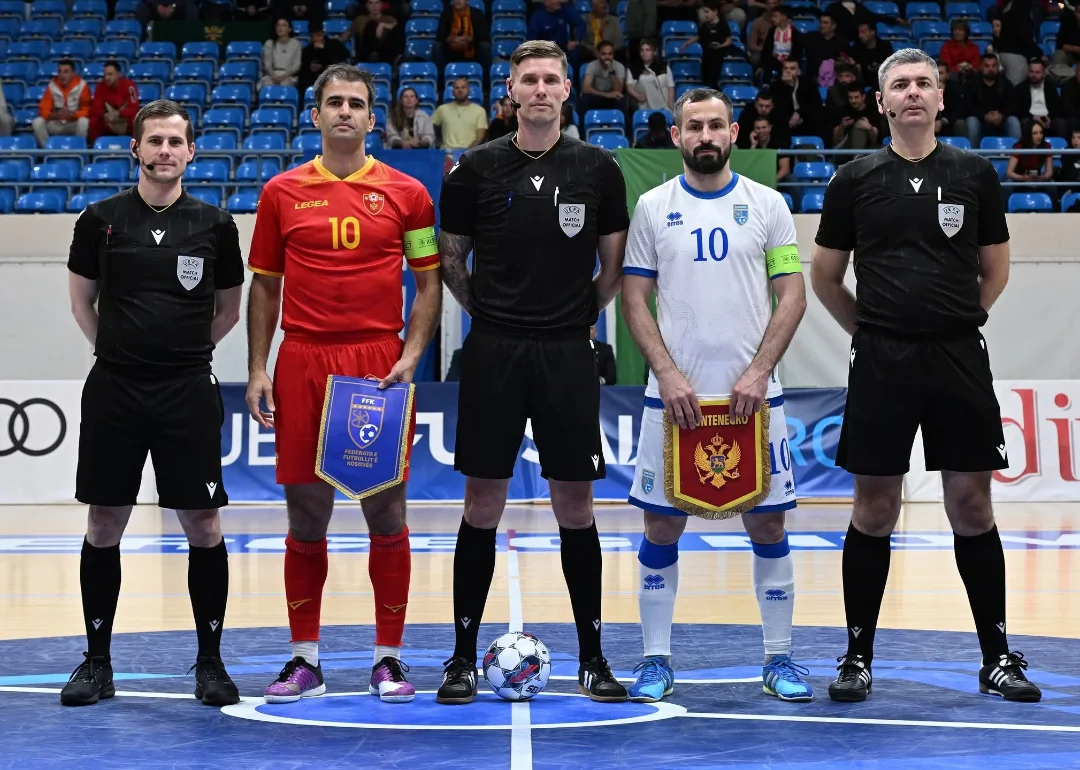
(Main picture: Kosovo v Montenegro – source of the image: fkkfutsal Instagram)
The standings suggest control. The reality was more fragile.
This was a group defined by pressure, sustained, repeated, and often overwhelming. What mattered was not just creating chances, but what happened when that pressure had to be sustained long enough to decide a match.
The moment it nearly turned
Every group has a moment where it threatens to shift. In Group D, it came at the very end.
Kosovo’s 3–3 draw with Montenegro was not just a final fixture. It was the one point where everything they had built across the group came under pressure. Montenegro led 3–2 in the closing seconds, close to turning the group on its head.
Kosovo responded in the final moments.
Across the match, the numbers told one story, with Kosovo producing 50 attempts to Montenegro’s 23 and 23 shots on target to 14. But the scoreline told another. For all of Kosovo’s dominance, the game never fully separated.
That late equaliser didn’t just secure the result. It confirmed the pattern that had defined them throughout the group.
Even when the game drifted away from them, they found a way to bring it back.
Kosovo: pressure without let-up
Kosovo’s campaign was built on one constant: they never stopped asking questions.
In their opening match, an 11–0 win over Gibraltar, the imbalance was immediate. Kosovo produced 39 attempts to just 6, with 25 shots on target and complete territorial control. The game was effectively decided long before the final whistle.
Against Austria, the dynamic shifted slightly, but the outcome did not. Kosovo produced 33 attempts to Austria’s 24, with 20 shots on target, converting pressure into a 6–3 win that never allowed Austria to settle.
But it was the final match against Montenegro that revealed the most about them. With 50 attempts and 23 on target, Kosovo controlled the game for long periods, yet still needed a late goal to secure the draw. It was the only moment in the group where their dominance did not translate cleanly into separation.
Across three matches, the pattern was consistent. They built pressure early, sustained it, and forced games to be played on their terms. Even when that control loosened, it was never fully lost.
That is what carried them through.
Montenegro: close enough to take it, not quite enough to hold it
Montenegro’s route to qualification was built on taking the moments that were available, and almost taking one more.
Their opening 3–2 win over Austria showed exactly how they approached the group. Austria created 30 attempts to Montenegro’s 25, with 16 shots on target to 14, yet Montenegro found the goals that mattered. They didn’t control the game. They controlled the key moments within it.
Against Gibraltar, they did what was required, winning 6–0 with 26 attempts and 15 on target, keeping the group in their hands heading into the final match.
That left everything resting on the meeting with Kosovo.
For long periods, they absorbed pressure and stayed within reach. With 23 attempts and 14 on target, they were efficient, direct, and close to taking control of the group itself. Leading in the final seconds, they had done enough to change the outcome.
But not quite enough to finish it.
Their tournament was defined by that fine margin. Competitive in every moment, effective when it mattered, but just short of controlling the decisive one.
Austria: output without consistency
Austria’s group can be read through contrast.
Against Gibraltar, everything worked. They produced 26 attempts to 5, with 15 shots on target and a 7–0 result that reflected complete control. It was the level of performance their numbers elsewhere suggested they were capable of.
But the rest of the group never fully aligned.
Against Montenegro, they created more, producing 30 attempts and 16 shots on target, yet lost 3–2. Against Kosovo, they remained involved, scoring three goals, but conceded six while facing 33 attempts and 20 shots on target.
The pattern was clear. Austria could create, could compete, and at times could control phases of matches. But they struggled to sustain that control long enough to shape outcomes.
They were always in the game. They were rarely deciding it.
Gibraltar: a group played under pressure
For Gibraltar, the group followed a predictable path, but not without moments of resistance.
Across their three matches, they faced sustained pressure in every direction. Kosovo produced 39 attempts against them, Montenegro 26, and Austria 26 again. The margins in possession and territory were consistent throughout.
What mattered was how long they could hold shape within that.
At times, they did. Short stretches where the game remained contained, where the scoreline had not yet broken. But over the course of each match, the pressure accumulated, and once it did, the games moved beyond them quickly.
Their campaign was not defined by single moments, but by the difficulty of sustaining structure under constant pressure.
The difference across the group
Group D did not require complexity to understand its outcome.
Kosovo imposed matches. Montenegro stayed within them. Austria contributed to them. Gibraltar endured them.
The difference was not simply in goals or attempts, but in how each team handled the same environment.
Kosovo extended pressure until it broke games open. Montenegro managed moments within that pressure. Austria moved between the two without settling. Gibraltar absorbed until they no longer could.
That is why the group finished the way it did.
Final word
Group D produced one of the clearest identities of the preliminary round.
Relentless attacking, sustained pressure, and matches that often felt decided before they were finished, until one almost wasn’t.
Kosovo progressed because they imposed themselves on every match, even when control loosened. Montenegro progressed because they remained close enough to take advantage of the moments that mattered.
The rest were left chasing games played at a level they could not quite manage.
That is what decided Group D.
And that is what will be tested next.
Organ Donation
Futsal Focus is a supporter of Dáithí Mac Gabhann and his family’s campaign to raise awareness of Organ Donation. We encourage our readers to learn more about Organ Donation: https://www.organdonation.nhs.uk/
Futsal Focus
You can read more articles about global futsal by going to the top navigation bar or by clicking here.
If you like this article and would like to keep updated on Futsal news, developments, etc then you can now follow Futsal Focus via Google News by following our page.
You can also keep updated on Futsal news by submitting your email in the Subscribe to Futsal Focus option.
Follow Futsal Focus on Facebook, Twitter, or Instagram via the website.



